Calendar & News
Apart from human suffering, the ongoing war is taking its toll on Lebanon’s environment. The effects on the environment are diverse: to begin with, the weapons used have a negative impact on soil, water, and air. In addition to the clear and visible impacts of warfare itself on the environment, the conflict makes any progress on climate policy impossible. On November 14, IFG is organizing the event “The Ecological Effects of War” to share experiences and insights with the Dutch public. In this article, we present the wide range of impacts that war has on the environment, both direct and indirect.
White phosphorus bombs
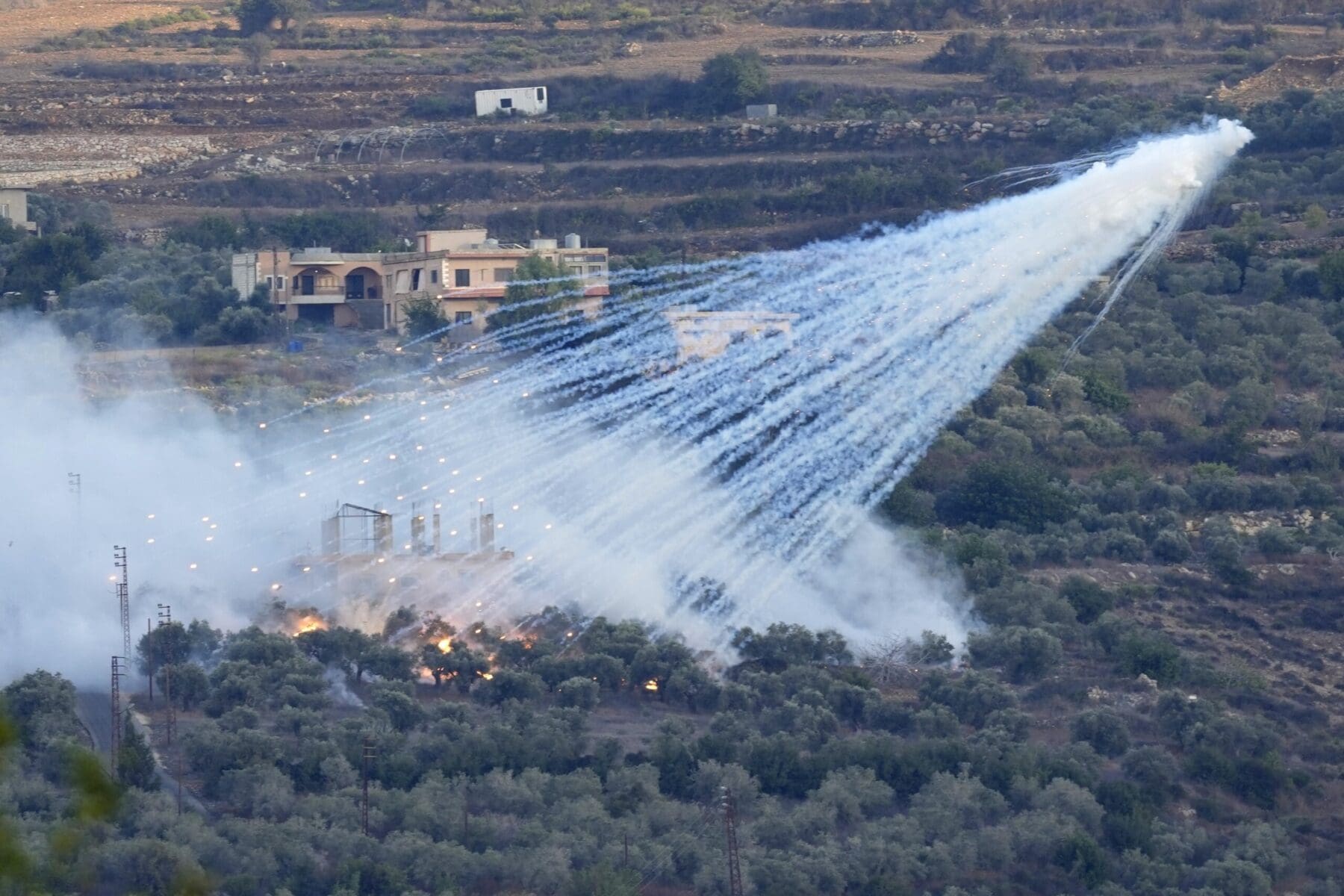
To begin with, in the current conflict, Israel is using white phosphorus against targets—including agricultural land—along Lebanon’s southern border. White phosphorus is primarily used to create a smoke screen for combat purposes. It can also be used as an incendiary weapon—a weapon designed to start fires. White phosphorus burns as long as it is exposed to oxygen; it is therefore difficult to extinguish with water. It scorches large areas of land, leaving them infertile for the foreseeable future. Toxic chemicals, such as phosphoric acid from the bombs, seep into the soil and contaminate both the soil and the groundwater. Parts of the bombs, including toxic compounds, remain in the soil for years. The bombs also contain persistent environmental toxins which, as the name suggests, remain in the environment nearly indefinitely because they are resistant to degradation. These toxins can spread easily through wind and water and thus have a far-reaching impact on the environment, not just in Lebanon.
Israel has used white phosphorus in conflict before: most notably, it was used in Gaza during a military operation in 2008. Following international outrage over these attacks—since attacks on civilians are prohibited under international law—Israel vowed to use white phosphorus only in two unlikely scenarios, which it did not disclose publicly. The government maintained that it used it solely to create smoke screens, as it also claims to be doing in Lebanon at present.
Oil spill
This is not the first time a war has caused significant ecological damage in Lebanon. The country suffered one of its worst environmental disasters during the 2006 Israel-Lebanon war, when a major oil spill occurred after Israeli forces bombed a power plant in Jiyeh, just south of Beirut. Due to an Israeli naval blockade, cleanup efforts could not begin immediately. As a result, 170 kilometers of coastline were covered in an oil slick, threatening the habitat of fish and an already endangered species of turtle. A resolution by the United Nations General Assembly was passed by a large majority, calling on Israel to compensate Lebanon for the environmental damage caused and to cover the costs of the cleanup. Israel objected to paying anything. In 2014, the United Nations asked Israel to pay 850 million, but Israel called the resolution biased and still refuses to pay to this day.
Agriculture and Biodiversity
Given Israel’s lack of accountability in the past, people in Lebanon are skeptical about how the effects of the current conflict will be addressed—effects that are already being felt in Lebanon’s southern region, where many people rely on agriculture. The olive tree has been a lifeline for the region’s population. Deliberate attacks by Israel on agricultural lands have placed a serious strain on the environment. While some crops have survived the direct threat of shelling, they remain at risk of contamination.
As a result of Israel’s shelling with white phosphorus, olive trees have been burned down, which is a huge problem because olive cultivation is a major source of income for many people in Lebanon and accounts for 7% of Lebanon’s GDP. 47,000 olive trees have already been burned down as a result of phosphorus bombs, causing global olive oil prices to rise. In addition to its economic importance, the olive tree is an iconic symbol for the people of Lebanon, and these trees also play a vital role in ecosystems. They provide shade, help regulate temperatures, improve air quality, and keep the soil strong and healthy.
The conflict has also affected biodiversity in Lebanon: as a result of the phosphorus bombs, the number of decades-old trees, such as citrus trees, has declined. Mammals, birds, and fish have died or migrated as a result of the deterioration of the local ecosystem.
Infrastructure
In addition to agricultural lands, infrastructure in Lebanon has also been severely damaged. Under the laws of armed conflict, it is illegal to target facilities that are essential to people’s survival, including water infrastructure. Yet this type of infrastructure has been damaged as a result of Israeli attacks in Lebanon. Further contamination of water in Lebanon has been caused by components of flare bombs and white phosphorus, which are considered toxic. These facilities are crucial in a country with an already unstable water management system. Further deterioration will increase the risk of waterborne diseases and contamination of drinking water. This, in turn, poses health risks to people and animals who drink this water.
Waste
Any conflict produces waste, from the rubble of destroyed buildings to toxic compounds from weapons. Add to this the fact that waste management has largely come to a standstill as a result of the conflict, and an environmental crisis ensues. Waste is disposed of in undesignated areas or burned. Burning or dumping all kinds of waste together causes chemicals to mix or produces toxic smoke, both of which negatively affect ecosystems.
Governance & Green Policies
The fact that the conflict has spread to Lebanon means yet another crisis for Lebanon, which has faced plenty of hardship in recent years. The country was considered relatively stable until protests broke out in 2019. Following the 2020 Beirut explosion and the COVID-19 pandemic, the country has faced one crisis after another. Now that Lebanon is dealing with an active war situation, it cannot prioritize environmentally friendly policies. The government has already been struggling with effective governance, particularly with regard to climate policy. The current conflict will push Lebanon closer to irreversible damage to its environment.
Conclusion
In addition to the human suffering, fears of irreversible damage to Lebanon’s environment are another reason why the conflict should be ended as soon as possible. The Israeli government should respect international law and refrain from intentionally harming civilians or objects vital to their survival—such as water facilities and agricultural land—as it has been called upon to do many times in the past. White phosphorus should not be used anywhere near civilians, nor should it be used for any purpose other than its intended one, as long as the international community cannot agree on banning it indefinitely. Yet Israel’s apparent impunity fuels fears among the population that history will repeat itself, with the 2006 conflict still very much on people’s minds. The international community must act decisively to ensure that this time, things will be different.
The president of the Green Party of Lebanon will speak about these issues and possible solutions during our event on this topic. Join us to learn more about the current situation in Lebanon and the region.
More information can be found here.
Sources:
Al Jazeera. (December 20, 2014). UN asks Israel to pay Lebanon $850m. Al Jazeera. https://www.aljazeera.com/news/2014/12/20/un-asks-israel-to-pay-lebanon-850m
Eid, M. (September 6, 2024). Israel’s Environmental and Economic Warfare on Lebanon – The Tahrir Institute for Middle East Policy. https://timep.org/2023/11/28/israels-environmental-and-economic-warfare-on-lebanon/
UNDP. (December 2024). Gaza War: Preliminary Findings on the Socio-Economic and Environmental Impact on Lebanon. UNDP. https://www.undp.org/lebanon/publications/gaza-war-preliminary-findings-socio-economic-and-environmental-impact-lebanon#:~:text=The%20outbreak%20of%20the%20war%20in