Publication
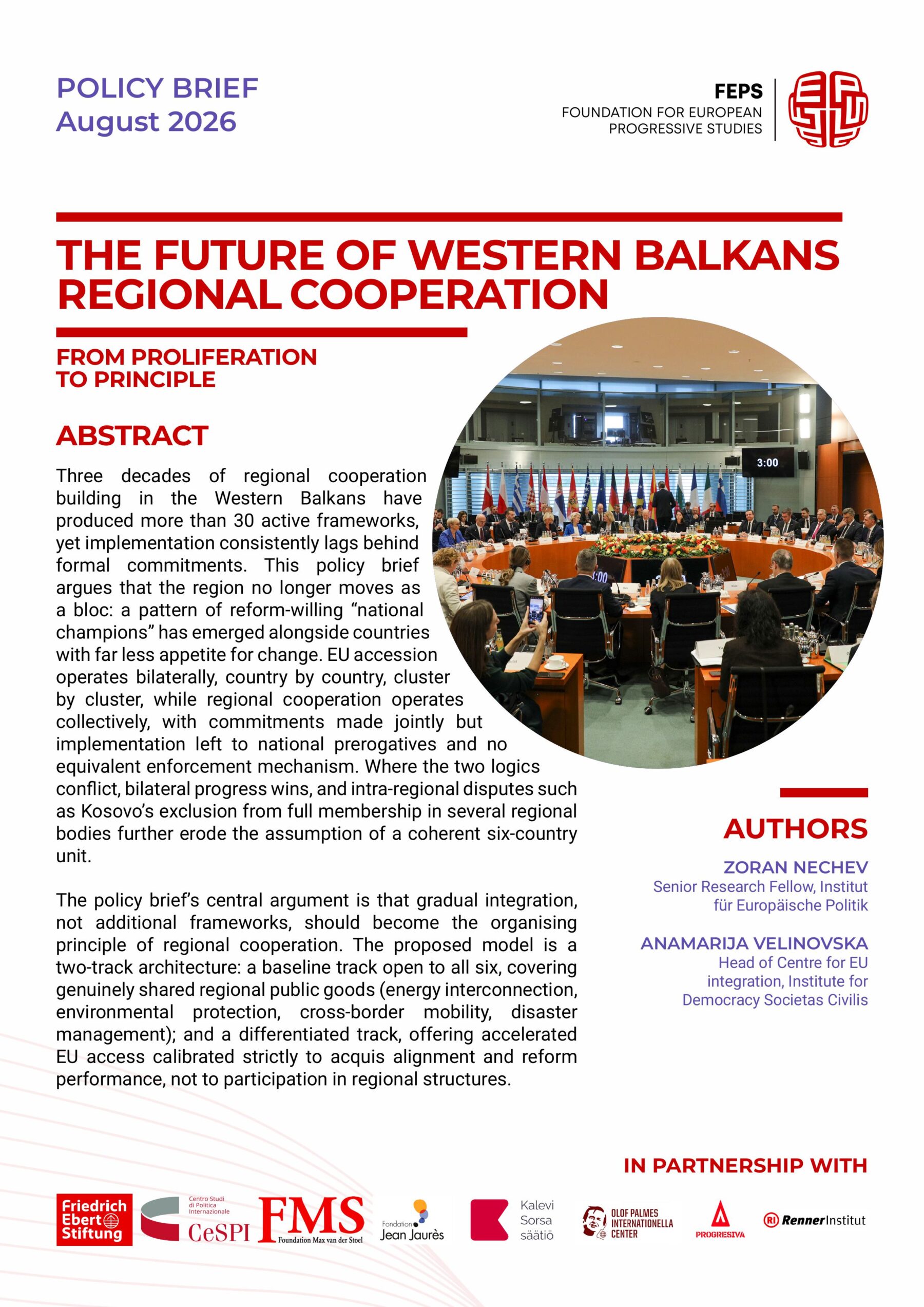
Thirty years of regional cooperation in the Western Balkans have led to more than thirty partnerships. Yet the implementation of agreements often lags behind.
This study explains why the non-EU countries in the Western Balkans are increasingly failing to act as a single region and why national interests and tensions among them are hindering cooperation.
The publication therefore advocates a more practical approach: less emphasis on new partnerships and more focus on achieving tangible results for citizens in the various countries. It proposes combining joint regional cooperation with a tailored approach for each country, allowing countries to integrate more quickly into the European Union based on their reforms and progress.
Read the full article below! We conducted this study in collaboration with the Foundation for European Progressive Studies (FEPS).