EU-Africa Youth Think Tank
In the EU-Africa Youth Think Tank, 30 young people spend five months working on real-world policy issues related to Dutch/EU-Africa relations. They conduct research, talk with policymakers, experts, and African peers, and draft their own policy recommendations. They then present these recommendations to the Ministry of Foreign Affairs. Along the way, they organize two sessions during Africa Day, receive skills training, and visit EU institutions. PRO International has been organizing the think tank since 2023, with support from Erasmus+.
Who decides the future of Europe and Africa?
Young people still have far too little say in international policy and agreements between Europe and African countries on migration, trade, or climate. We believe this needs to change. Young people will have to live with the consequences of today’s policies the longest, so their perspective belongs at the table.
The Dutch Africa Strategy promises an equal partnership with African countries. The think tank is evaluating that promise. Participants are examining where policy and practice diverge and identifying areas for improvement.

EU-Africa Youth Think Tank | 2025
From the first session to policy recommendations
A group of thirty young people from diverse backgrounds will work in two working groups. Each working group will be presented with a policy dilemma that we will develop in collaboration with the Ministry of Foreign Affairs. There is no right or wrong answer. The participants will weigh the various interests against one another and formulate a well-reasoned position.
The program combines knowledge, skills, and social interaction:
- Building knowledge. Policymakers from the Ministry of Foreign Affairs, (international) researchers, and experts provide background and context.
- In conversation with African youth. In a digital youth dialogue, participants share their ideas with young activists and professionals from various African countries.
- Brussels Up Close. Participants visit EU institutions, think tanks, and UN organizations to see how European policy on Africa is shaped.
- Skill-building. Workshops on lobbying and policy advocacy, public speaking, and program development.
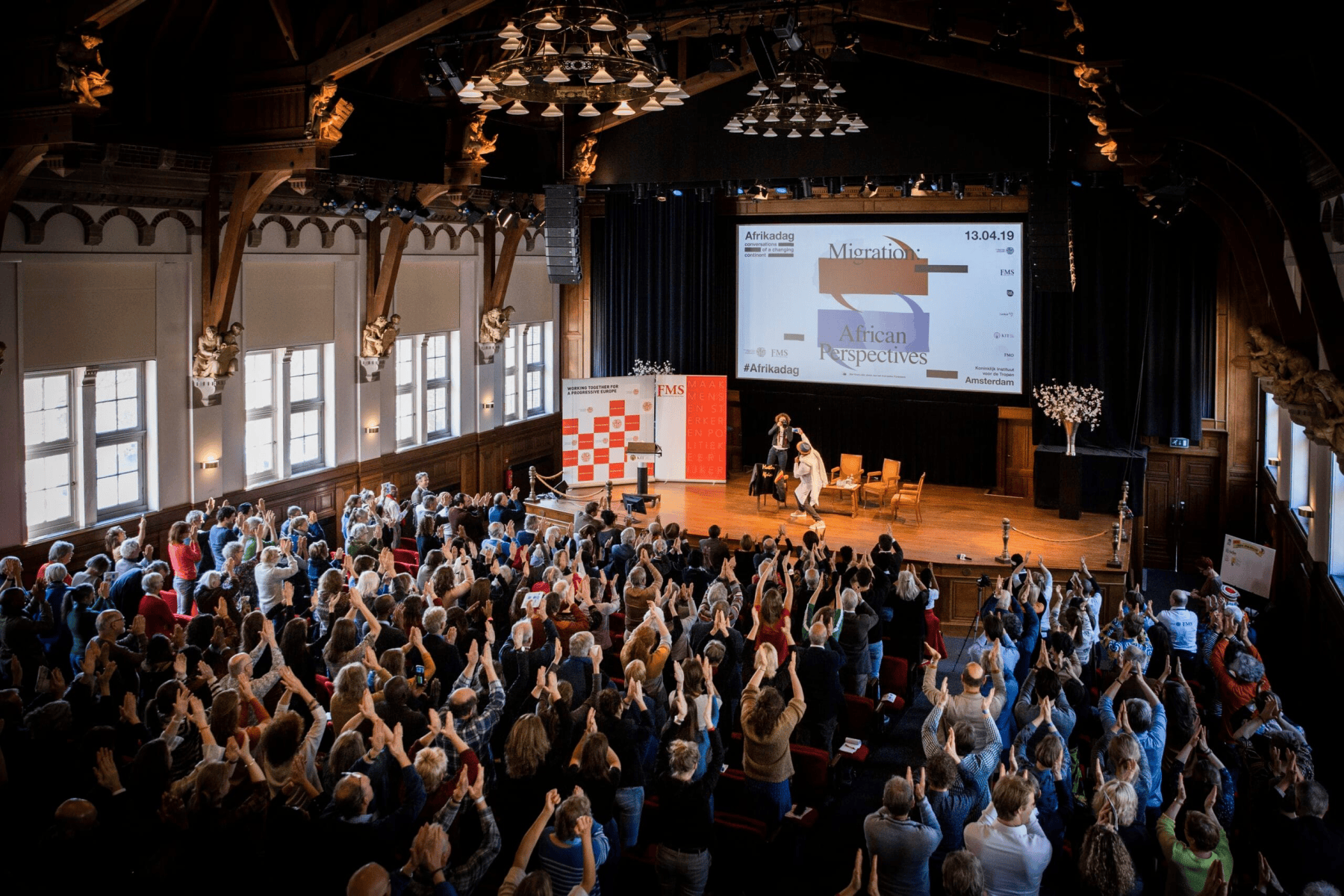
- Present their findings. The working groups will organize two sessions of their own on Africa Day and present their findings to politicians, experts, and the public.
- Provide recommendations. The process concludes with a policy recommendation that the young people present to the Ministry of Foreign Affairs.
The 2026–2027 edition: raw materials and labor migration
This year, the participants are working on two issues that the Dutch government is currently grappling with.
Raw Materials: Resource or Partner? Europe needs cobalt, lithium, and other critical raw materials for the energy transition. More and more African countries want to process these raw materials themselves rather than exporting them in their raw form. Some countries are therefore restricting the export of raw materials. How should the Netherlands and Europe respond to this, given that they also advocate for an open trading system? And how can we ensure that the outcome is fair for both sides?
Labor Migration: Whose Labor Market Matters? The Netherlands faces major shortages in the healthcare and technology sectors. Many African countries are also grappling with shortages in precisely those sectors. What do labor migration partnerships look like that benefit both sides without countries losing their scarce skilled workers?
About Previous Editions
2023: the first think tank. Thirty young people worked on building equitable relationships between the Netherlands and Africa and on climate justice. They spoke with, among others, the Africa Department of the Ministry of Foreign Affairs, the Africa Study Center, and young climate activists from six African countries, and presented their ideas on Africa Day.
2025: From The Hague to Brussels. The second edition focused on two questions: How do you keep Africa high on the political agenda, and what does a future-proof economic model between Europe and Africa look like? A new feature was the trip to Brussels, which included discussions at think tanks such as ECDPM, FEPS, and the Africa-Europe Foundation, at the European External Action Service and DG INTPA, and at UNDP and UNEP. On Africa Day, the young people organized a panel featuring European and African youth and a simulation game on the blue economy. In December, they presented two policy recommendations to officials from the Ministry of Foreign Affairs.
2026: A Youth Voice in the European Parliament. Six representatives from the 2025 think tank participated in the S&D Group’s Africa Days at the European Parliament. There, they discussed colonial history, local value creation, fair taxation, and climate justice.

Collaboration
We collaborate with the Ministry of Foreign Affairs, the Leiden Center for African Studies, FEPS’s EU-Africa Progressive Network, and civil society organizations and think tanks in the Netherlands and Brussels. The project is supported by Erasmus+.
Want to learn more? Read the 2025 policy recommendations or contact us at [email protected].