Fair Policy
“For many Africans, achieving the UN Sustainable Development Goals is a matter of life and death. Unfortunately, their ability to meet these goals is hampered by illicit and hidden capital flows that amount to tens of billions each year. […] It is high time that the international community addresses this injustice in global taxing rights that is impoverishing millions.”
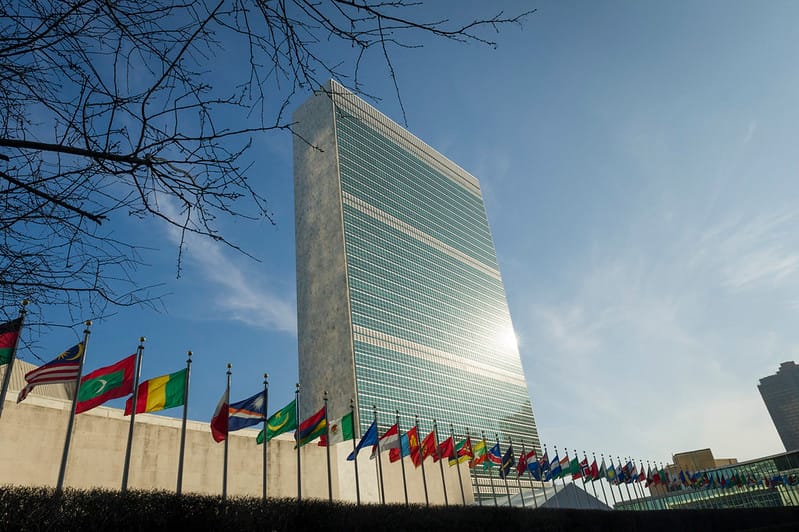
That was the message delivered by South Africa’s representative in November 2023 at the Economic and Financial Commission during the78th General Assembly of the United Nations (UN). That General Assembly marked a turning point in the world of international tax justice. On December 22, 2023, a large majority of countries voted in favor of a resolution proposed by the bloc of African nations to negotiate more inclusive and effective international tax agreements within the UN.
The call by the bloc of African countries for reform of the international tax system did not come out of nowhere. According to the Tax Justice Network, countries worldwide lose $492 billion annually due to international tax abuse. More than two-thirds of that amount is caused by tax abuse by multinational corporations. As a result, governments worldwide are missing out on significant tax revenues that are crucial for financing services such as health care and education. This is particularly problematic for low-income countries: they lose, on average, the equivalent of 36% of their health care budget annually to international tax abuse, while in high-income countries that figure is “only” 7%. Moreover, the public finances of many developing countries are already under severe strain due to growing debt burdens and shrinking financial support from traditional donor countries. Mobilizing tax revenue is therefore crucial to closing the growing financing gap for the Sustainable Development Goals.
Nevertheless, in 2023, a group of countries voted against the resolution put forward by the bloc of African nations. The Netherlands was one of those countries. The resolution was, however, supported by a broad coalition of countries from South America, Asia, and Africa. Negotiations on the content of these new international tax agreements are now in full swing. These negotiations focus not only on combating tax abuse but also on how countries will divide taxing rights among themselves to tax the profits of multinational corporations. Through the end of 2027, countries will be negotiating the text of the so-called “UN Framework Convention on International Tax Cooperation” in New York and Nairobi. After that, it will be up to countries to sign and ratify the framework convention. That framework convention will lay the groundwork for further binding agreements in the future, also known as protocols. This is similar to how the United Nations Framework Convention on Climate Change formed the basis for the Kyoto Protocol and, later, the Paris Agreement.
Although the fairness of our tax system is also the subject of intense debate here in the Netherlands, this international dimension is often overlooked. Why does the Netherlands seem to resist efforts to rewrite unfair tax rules? And which rules make the current international system so unfair?
An Unfair System
To understand the battleground within the United Nations, we first need to take a step back. At the foundation of our international tax rules lies a vast network of more than 3,000 bilateral tax treaties. When a company operates in more than one country, countries often have overlapping interests in taxing that company. Consider, for example, Shell, which has its headquarters in England and production facilities in Nigeria, or Netflix, which is headquartered in the United States but sells its digital services worldwide. Starting in the20th century, a growing number of countries therefore entered into bilateral tax treaties to allocate taxing rights over multinationals among themselves and to prevent double taxation.
However, this allocation of taxing rights is not neutral. When negotiating bilateral tax treaties, countries generally rely on two competing model treaties: the Organization for Economic Cooperation and Development (OECD) Model Tax Convention and the United Nations (UN) Model Tax Convention. To allocate taxing rights, such a bilateral treaty generally distinguishes between the country of residence (where the enterprise is tax-resident) and the source country (where economic activities take place and income is generated). In practice, multinationals are often based in high-income countries, while developing countries more frequently serve as source countries. The main difference between the two model treaties is that the OECD model grants relatively more taxing rights to the country of residence, while the UN model recognizes broader taxing rights in the source country.
Given the OECD’s membership, this comes as no surprise. Unlike the UN, which has universal membership, the OECD represents the interests of a select group of prosperous and economically developed countries. Nevertheless, starting in the 1960s, the OECD emerged as the global standard-setter in the field of international tax agreements. Despite the UN’s alternative model treaty, developing countries are not always able to compete with the interests of capital-exporting countries in bilateral negotiations. According to critics, bilateral tax treaties therefore primarily serve as a tool to shift the costs of preventing double taxation from economically developed countries to developing countries.
On top of that, the current system is inherently susceptible to tax abuse. According to Vincent Kiezebrink, one of the fundamental causes of international tax avoidance is the fact that the various subsidiaries of a multinational are all taxed separately, even though they are, in reality, part of a centrally managed group: “This creates opportunities for tax arbitrage, making it advantageous for a company to establish itself in Bermuda and, for example, use transfer pricing to route a large portion of its profits there.” Kiezebrink is a researcher at the Dutch research institute Stichting Onderzoek Multinationale Ondernemingen (SOMO) and studies tax avoidance schemes used by multinationals. According to Kiezebrink, it would be better to work toward a system in which a multinational’s consolidated profits are taken as the starting point, and then determine which countries those profits should be allocated to. “Most independent experts agree that such a‘unitary taxation’system would work better than the current transfer pricing system, but ultimately it is the vested interests of countries and companies that complicate matters,” Kiezebrink states. He adds that even in the Netherlands, there is still a political reluctance to effectively tackle tax avoidance.
As one of the key links in the web of international tax avoidance, the Netherlands ranks 7th on the Corporate Tax Haven Index, alongside jurisdictions such as Bermuda, Singapore, and the Cayman Islands. According to the Tax Justice Network, the Netherlands is thus responsible for 12.27% of all global tax losses. This is partly because the Netherlands serves as a transit hub: multinationals use letterbox companies in the Netherlands as stopovers and exploit our tax rules and tax treaties to route money flows through the Netherlands to other tax havens. Although the government has taken some measures in recent years to combat the channelling of money through the Netherlands, 90% of incoming and 70% of outgoing income flows in the Netherlands are still of a transit nature.
Pioneers of change and guardians of the status quo
The OECD’s status as the preeminent authority on international tax rules is no longer as unquestioned today as it once was. Critics have raised concerns about both the effectiveness and the legitimacy of the OECD’s leadership on global tax issues. In 2013, the OECD began developing new rules to combat tax competition and tax avoidance. Most non-OECD countries were not invited to participate in discussions on the implementation of the so-called “Base Erosion and Profit Shifting” rules until a later stage. According to critics, the result is a deal in which developing countries once again come up short. In 2023, the UN Secretary-General also concluded that existing forums are not inclusive enough and that existing international agreements do not sufficiently take into account the interests of developing countries.
Against this backdrop, the bloc of African countries took the initiative to establish a more inclusive decision-making process for international tax cooperation within the UN. This historic move has so far received little support from OECD countries. The Netherlands, like other EU countries, initially voted against the resolution but is actively participating in the negotiation process. Kiezebrink rejects the argument put forward by opponents that the UN process will lead to duplication of the OECD’s work: “After all, it is the OECD’s failure that brought us to the UN.”
The decision memorandum accompanying the Netherlands’ most recent written submission on the draft text of the UN Framework Convention shows that the Netherlands is at odds with the Global South in the negotiations by pushing for “more broadly worded provisions.” For example, under Article 5 of the framework convention, the Netherlands opposes commitments to renegotiate existing bilateral tax treaties if they do not ensure a fair allocation of taxing rights. According to the Netherlands, such obligations do not belong in the framework convention and must be avoided to ensure a broadly supported framework convention. Although several European countries share this position, some are taking a more constructive approach than others at this stage. While commitments to renegotiate existing bilateral tax treaties are also a step too far for them, Norway and Sweden, for example, are using their written submissions to push for more concrete wording that provides greater direction for the drafting of future protocols.
The Netherlands is therefore not joining the leading group of countries from the Global South that are advocating for fundamental reforms, but is, to put it mildly, adopting a cautious stance. That is a missed opportunity. The UN negotiations not only offer a historic opportunity to make international tax rules more equitable; they also present a crucial opportunity for the Netherlands and Europe to reshape their relationship with countries in the Global South and to restore crumbling trust based on genuine reciprocity.
Negotiations on the UN framework treaty are now entering a decisive phase. The final text of the treaty will be submitted to the UN General Assembly at the end of 2027. After that, it will be up to countries to sign and ratify the treaty. The question is which side the Netherlands will take: will it opt for a historic change of course, or for maintaining the status quo?