Fair Policy
EU enlargement is back on the agenda. Following Russia’s full-scale invasion of Ukraine in 2022 and amid growing uncertainty about the United States’ role in Europe, EU leaders have increasingly emphasized the need to expand the Union. Closer cooperation with countries in Eastern Europe and the Western Balkans is seen as important for the continent’s security and independence.
Yet joining the EU is a complex process. Since the reforms in 2021, candidate countries must complete negotiations across 32 policy “chapters,” grouped into six thematic “clusters.” These reforms aim to bring national laws and institutions into line with EU standards. Much attention is usually given to the so-called “fundamentals” cluster, which covers areas such as the rule of law and public administration. However, other clusters are equally demanding.
Chapter 27, on Environment and Climate Change, is particularly challenging and complex. Its requirements are aligned with the European Green Deal, which aims for climate neutrality by 2050 and thus requires major investments, strong administrative capacity, and coordination among institutions. It also has significant social implications for candidate countries, especially those where jobs and energy systems still rely heavily on fossil fuels.
In this series, we examine how candidate countries are addressing the challenges posed by the climate chapters of the EU accession process. We analyze their progress on reforms and focus on the complex dynamics of the green transition, democratic legitimacy, and social change. This article focuses on the final candidate country in this series: Ukraine.
Different conditions
Since Ukraine was granted EU candidate status in 2022, the country has had to pursue reconstruction, modernization, and alignment with the EU acquis simultaneously. Unlike other candidate countries, Ukraine is not only adapting its laws, institutions, and standards to meet EU requirements, but it is also doing so while dealing with the devastation caused by the war. In this case, reconstruction is not something that can wait until the war is over. Even as fighting and bombardments continue, damaged infrastructure must be repaired, as communities need access to electricity and heating.
Key energy infrastructure, including power plants, substations, gas facilities, and transmission networks, remains vulnerable to missile and drone attacks. Sergii Kurykin of the Green Party of Ukraine (PZU) explained how this affects policy: “Achieving perfect solutions is impossible,” and “the search for potential compromises can be really painful.” For a country working on reconstruction under wartime conditions, this raises an important question: How can reconstruction also contribute to progress toward Chapter 27?
The link between reconstruction and reform is important for Chapter 27. The Ukraine Facility, established in March 2024, provides up to €50 billion for Ukraine’s recovery, reconstruction, and modernization from 2024 to 2027. The Facility does more than just provide funding; it ties reconstruction funding to reforms that will shape the kind of country Ukraine rebuilds itself into. Every decision about what gets rebuilt—and how—also determines whether Ukraine’s recovery can support a greener and fairer transition.
Chapter 27 also asks whether environmental standards can be monitored and enforced in practice. For Ukraine, this is a difficult task. The European Commission’s 2025 Ukraine Report highlights that limited administrative capacity, funding constraints, and delayed legislation are the main obstacles to the effective implementation of the EU acquis in the field of the environment and climate. It also points out the need to strengthen enforcement, monitoring, and data collection. The challenge for Ukrainian institutions is to effectively monitor, enforce, and implement environmental legislation during reconstruction, while administrative capacity remains limited.
Diversification of Energy Sources
Ukraine is trying to align with EU rules while most of the population is struggling to survive. Kurykin notes that outsiders often underestimate how difficult life has become “even in the fully controlled central and western regions.” He mentioned that this winter, all available resources for survival were used, including diesel generators that do not meet sustainability standards.
However, the renewable energy sector in Ukraine is not starting completely from scratch. In 2024, the Ukrainian Solar Energy Association estimated that approximately 800–850 MW of new photovoltaic solar energy capacity had been added. Ukraine has also approved a plan to increase the share of renewable energy in its energy mix to 27% by 2030, partly through the introduction of 10,000 MW of new generation capacity from renewable sources.
According to Kurykin, reconstruction should not be limited to merely repairing what has been destroyed, but should also be viewed as an opportunity to modernize Ukraine’s energy system in line with EU standards. This means that damaged electricity and heating facilities should be replaced with cleaner, more efficient infrastructure that better meets the requirements of European integration.
He also highlighted the need to promote European ideas and experience regarding energy conservation and energy efficiency. At the same time, PZU emphasizes that progress toward EU compliance will depend on more than just legal reforms. Given their experiences during the war, they argue that the energy system must be restructured with a focus on resilience: “The diversification of energy sources and their decentralization is the most obvious conclusion, as well as the need for physical protection.” Implementation is therefore not just a legislative issue, but also a practical one, as it must serve as a means of protection.
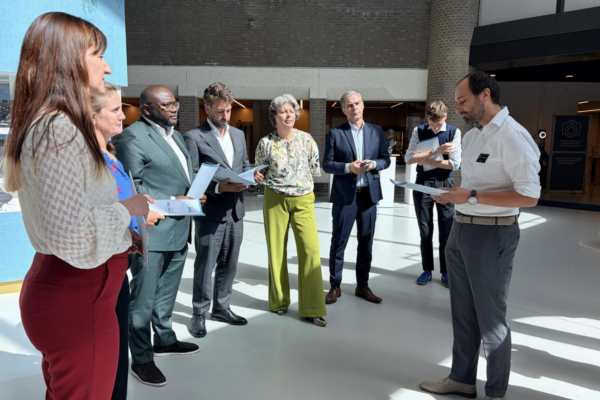
PZU is working to address this practical issue at the local level through several projects. Through the “Readiness to Challenges” project, they collaborated with communities where they have local council members (including Khotyn, Kaniv, Samar, and Pidgorodne) via conferences, training sessions, and roundtables, with the goal of developing policy recommendations for local authorities.
Making Compliance Legitimate
Another important point to consider is public perception. The community discussions PZU held also revealed why legitimacy matters for compliance. Regarding nuclear energy, Kurykin reported that despite awareness of the risks and the memory of Chernobyl, “the majority supports the use of nuclear power plants (with high safety standards, of course).” Regarding renewables, the message is positive, although concerns were also raised, including land use for solar energy, the impact of wind power on landscapes and nature, and waste and recycling issues.
Finally, Kurykin emphasized the “just” in “just transition.” EU accession requirements need to be clearly explained, including why they exist and how they have been implemented in other member states. “The transition costs should not be passed on to household consumers.” Regarding the legitimacy of accession, they argue that the requirements need a clear explanation: “Explanations of the nature, origins, and necessity of these requirements are needed,” and they call for “direct international partnerships at the community level.”
A just transition also means looking beyond the technical question of which energy sources Ukraine should rely on. We also need to consider which communities are most affected, and whether reconstruction can reduce inequalities rather than reinforce them. Many regions in Ukraine depend on fossil fuels. Building cleaner infrastructure can support climate goals, but it should also remain fair to the affected communities. If energy efficiency or investments in renewable energy are discussed purely as technical upgrades, there is a risk that the social dimension will be overlooked.
For Chapter 27, the real test is not only whether Ukraine can transition to a green economy, but whether it can do so in a way that remains resilient, legitimate, and socially equitable. Ukraine’s path toward EU accession and its energy-related commitments may still be possible, but it will depend on whether reforms can be implemented while reconstruction, energy security, and public support remain under pressure.
Click here for parts one and two, which focus on Montenegro and Albania, respectively.