Fair Policy
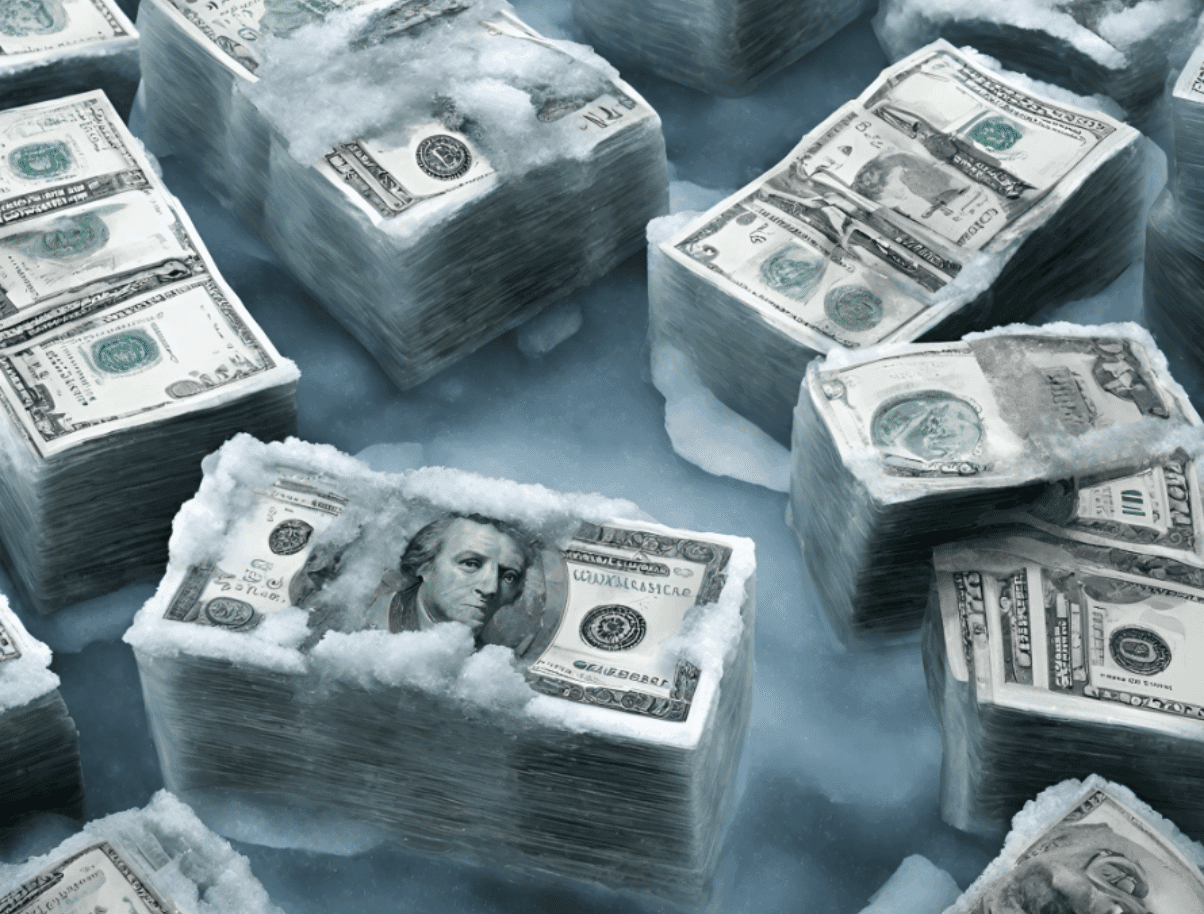
Ever since the first months of the war in Ukraine, many—including Ukrainian authorities—have been advocating for the use of frozen Russian assets to rebuild Ukraine. In practice, however, this goal has proven difficult to achieve, including in the Netherlands. The freezing of Russian assets is far from a smooth process, and using these assets for Ukraine’s reconstruction suffers from a lack of international will and decisiveness. What are the obstacles standing in the way of the just use of frozen Russian assets? And what signals does the recent EU summit in Brussels send regarding this issue?
Failure to Freeze Russian Assets in the Netherlands
Before any consideration can be given to the use of frozen Russian assets, it is, of course, essential that these assets are actually frozen in the first place. To this end, financial institutions, such as banks, must identify Russian assets that appear on the European sanctions list. Subsequently, Russians are denied access to these assets, such as bank accounts. Unfortunately, this is not always the case in the Netherlands. For example, an investigation by Follow the Money earlier this year revealed that of the approximately 50 billion euros in Russian assets in the Netherlands, only 465 million euros had been frozen. That amounts to roughly 1%. And that is a distressing statistic, especially when compared to the situation in Belgium around the same time: Belgium had already frozen 58 billion in Russian assets by then. A major reason for this was the lack of coordination in tracking down Russian assets in the Netherlands, which meant the task fell to many different actors: various ministries, companies, lawyers, notaries, and other professionals.
Four months later, the situation seemed to have improved very little. At that point, only 664.5 million euros in Russian assets had been frozen, while 200 billion in assets had already been frozen across the EU. A study by De Nederlandse Bank also revealed that one-third of Dutch financial institutions had not been sufficiently successful in identifying and freezing Russian assets.
In addition to failing to enforce sanctions, the Netherlands has also played a role in Russia’s circumvention and violation of sanctions, according to figures from the Dutch Financial Intelligence Unit. The figures revealed that last year, at least 10.5 billion euros in Russian funds were transferred to or from the Netherlands to evade EU sanctions.
Unfortunately, the November election results offer little hope for the Netherlands’ future actions in this area. Partly because Wilders opposes sanctions against Russia, his electoral victory was widely celebrated in Russian state media. In Ukraine, the PVV’s gains are therefore fueling fears of a further erosion of Western support for the country.
Russian Assets as a Means for Ukraine's Reconstruction
One of the many reasons why successfully freezing Russian assets is so important is the crucial goal for which the money can serve as a means: the reconstruction of Ukraine. Every financial contribution to this recovery is sorely needed. After all, the costs of Ukraine’s reconstruction are substantial: estimates suggest they could exceed 1 trillion dollars. Currently, approximately 400 billion dollars in Russian assets are frozen worldwide.
The reconstruction of Ukraine is a price that Russia must logically pay, given the damage it has caused. As Ukrainian President Volodymyr Zelensky argued: “Russia must pay the full price for its aggression.”
With its invasion of Ukraine, Russia has caused an enormous amount of damage, injury, and destruction in Ukraine—not only physical, but also economic, psychological, and cultural. To the extent possible, Russia will therefore have to repair what it has destroyed. The frozen Russian assets give many countries the perfect opportunity to hold Russia accountable for this moral responsibility.
Why is there such a strong desire to invest in Ukraine’s reconstruction? One of the many reasons why Ukraine’s recovery is so incredibly important is that the country’s postwar stability is crucial to the future prospects of an expansionist Russia. A stable, prosperous, and democratic Ukraine—a Ukraine where fundamental rights are protected and a Ukraine that is a full member of the European and North Atlantic political community—is, in fact, one of the ways to counter Russian expansionism. After all, unstable and polarized neighboring countries provide the perfect breeding ground for Russia to spread its subversive influence, which is often accompanied by the erosion of democracy, human rights, and sovereignty.
A (lack of) international will and resolve
The value of using frozen Russian assets for Ukraine’s reconstruction seems almost self-evident. Yet this idea does not appear to be receiving the same level of support everywhere. What are the relevant international developments?
Let’s start with two international players that are setting a good example: Belgium and Estonia. On October 12, the Estonian government approved a bill that, once passed by parliament, will allow for the transfer of frozen Russian assets to Ukraine. The Estonian Minister of Foreign Affairs described this as an encouragement for other countries to enact similar regulations. A day earlier, Belgian Prime Minister Alexander De Croo announced that Belgium expects to be able to support Ukraine with the billions in proceeds from frozen Russian assets. De Croo called on other EU countries to follow Belgium’s example.
If we look beyond Europe, we see that the U.S. is making modest progress. For example, earlier this year, the country transferred more than $5 million in seized assets belonging to a Russian oligarch to Ukraine. Nevertheless, the U.S. government continues to cite legal obstacles to seizing Russian assets. However, it can be argued that the U.S. president can use emergency powers to transfer these sovereign assets to a frozen account designated for Ukraine’s recovery. Similar economic countermeasures were taken against Iranian government assets in 1981 and Iraqi funds in 1992. Furthermore, the Renew Democracy Initiative concluded in a comprehensive report that there is no basis for the alleged legal doubts regarding whether the U.S. president possesses this authority. Despite lingering doubts, some progress appeared to have been made by the end of September. At that time, the U.S. envoy for Ukraine’s reconstruction explicitly stated that Russian assets frozen by Western countries should be used for Ukraine’s reconstruction.
Resistance in the European Union
If Russian assets were to be used for Ukraine’s recovery, this would significantly reduce costs for the European Union. The EU has, in fact, pledged to cover a huge portion of Ukraine’s reconstruction costs. Nevertheless, the idea of using frozen Russian assets for Ukraine’s reconstruction is also likely to face resistance within the EU. In early September, it became clear that opposition from certain EU countries, including Germany and France, led the European Commission to delay plans for a levy on profits from frozen Russian state assets.
Legal considerations also play a role here. There are doubts about the flexibility of international law and the safeguarding of sovereignty. As a counterargument, one can again refer to the report by the Renew Democracy Initiative. In addition, experts have been working on a theoretical legal basis from which governments should pursue options to make Russia bear the financial costs of its aggression.
Another important reason for European resistance is economic in nature. For example, concerns have been raised about the impact these plans would have on the euro’s international reputation and EU trade relations. The idea here is that countries will be deterred by the fact that their assets in European countries could be frozen “just like that” for political reasons. This would undermine confidence in the euro.
However, the question is to what extent it is actually believed that the European Union will seize foreign assets more frequently. Furthermore, this does not happen “just like that,” given that we are talking about serious war crimes. And even if the euro’s reputation were to suffer, is that reputation really more important than our reputation in the eyes of Ukraine?
Economist Vladislav Inozemtsev has introduced a proposal that both respects “European legal rules and the credibility of the European financial system” and uses Russian assets for Ukraine’s recovery. He adds: “This approach will not fully resolve all the financial and legal problems associated with frozen Russian assets. But I do believe that the current situation is much worse, because Western countries are now profiting from those assets. These assets contribute to the profits of their financial system (…) With a little imagination, we could even say that the West is now providing its financial aid to Ukraine using Russian money; after all, the total amount of financial and military aid doesn’t come close to the $300 billion frozen in Western banks.”
A glimmer of hope?
The frozen Russian assets have now generated a paper profit of nearly three billion euros. With some exceptions, there is unfortunately still international resistance to using these proceeds for Ukraine’s reconstruction. Nevertheless, during last month’s EU summit in Brussels on October 26 and 27, it appeared that cautious steps would be taken.
European Commission President Ursula von der Leyen had previously promised to present a plan for the billions in profits on the assets, but to no avail. EU leaders therefore wanted to discuss the issue again during the two-day summit. In a draft statement, they wrote that they demanded “decisive progress” regarding the use of frozen Russian assets to support Ukraine. In addition, both the United States and the United Kingdom expressed their support for an EU plan to levy a tax on profits from frozen Russian assets to finance Ukraine.
During the EU summit, EU leaders therefore backed plans to use profits from frozen Russian state assets for the reconstruction of Ukraine. They called on the High Representative and the European Commission to submit legislative proposals to that end. On the final day of the EU summit, Von der Leyen confirmed that the European Commission is working on a proposal to use a portion of the proceeds from frozen Russian state assets to support Ukraine and its reconstruction. However, she did not specify when such a proposal would actually be presented.
Although these steps are a step in the right direction, it is important not to celebrate too soon. Despite the fact that the EU proposal has yet to be released, it is already apparent that the Russian funds the Commission intends to allocate to Ukraine represent only a small portion of the funds from Russian assets that the EU could potentially utilize. Furthermore, it remains important to continue working toward improved detection and freezing of Russian assets, particularly in the Netherlands.