Democracy
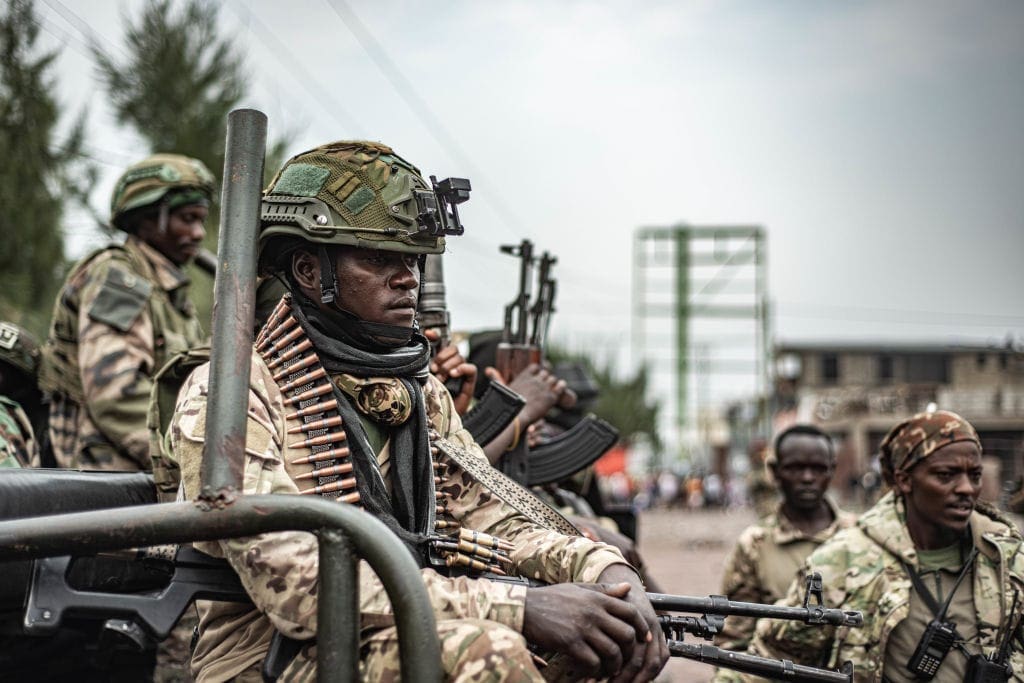
On March 21, the Max van der Stoel Foundation is organizing a political café on the crisis in the Democratic Republic of the Congo (DRC). The situation in the DRC is rapidly deteriorating: violence is escalating in the eastern part of the country, with large-scale human rights violations and the systematic use of sexual violence as a weapon of war. The city of Goma, with nearly two million residents, was captured in late January by the Rwandan-backed rebel group M23. The bloody fighting between the M23 and the Congolese army has claimed at least 3,000 lives. At the same time, Europe’s role in the conflict remains contradictory: the EU is one of the largest humanitarian donors to the DRC, yet it also maintains economic and military ties with Rwanda, a key player in the conflict. How should Europe rethink its role? And how can we work toward a better policy regarding the conflict? We spoke with Member of the European Parliament Marit Maij (GroenLinks-PvdA), who advocates for a more equitable European policy.
A Dual Role for Europe
Although the EU plays a crucial role in humanitarian aid, according to Maij, that is only one side of the story. Europe is heavily dependent on raw materials from the region, such as coltan and cobalt, which are essential for modern technology and our green transition. However, the way these raw materials are traded contributes to instability in the DRC, because countries like Rwanda benefit directly from this, and the neighboring country—which extracts some of these raw materials illegally from the DRC—trades in them. The revenue from this trade in raw materials and the EU’s financial support for the Rwandan army strengthen armed groups such as the M23, which are held responsible for serious human rights violations in eastern Congo.
According to Maij, the EU must take a critical look at its own role in the conflict and “stop applying double standards.” She also believes we should stop entering into agreements with Rwanda whose exact terms remain unclear. The agreements reached between the European Commission and Rwanda regarding the trade in raw materials, set forth in a Memorandum of Understanding (MOU), raise questions about the level of transparency. “We simply don’t know exactly what was agreed upon,” she emphasizes. That is why she advocates suspending cooperation with and support for Rwanda as long as the country remains actively involved in the conflict in the DRC. “Rwanda is guilty of committing war crimes, specifically against women and girls. Rape is used as a weapon of war to destabilize communities and devastate the lives of residents. Sanctions must be imposed on these perpetrators,” Maij states.
Economic Interests and Political Considerations
Within the European Parliament, there is strong support for condemning human rights violations and imposing sanctions against Rwanda. In practice, however, the situation is more complicated. When the debate shifts to the economic consequences—such as the impact on the commodities trade—some members of Parliament become more cautious. Nevertheless, the resolution negotiated by Maij in the European Parliament regarding the escalating violence in the DRC has been adopted, marking an important first step toward a more equitable European policy. Among other things, the resolution states that the EU must condemn the occupation of eastern Congolese territories and that the current cooperation with Rwanda regarding raw materials must cease.
According to Maij, part of the solution lies in reorganizing mining and trade in the region. “Why don’t we think about how we can do that properly and transparently? And in a way that doesn’t harm the environment or violate human rights—that’s possible,” says Maij. That means not only stricter regulations and greater transparency, but above all, a different approach to collaborating with African countries. Instead of merely striking deals with government leaders and multinational corporations, local communities must also have a say in shaping economic activities. Maij believes that “we must ensure that civil society organizations and women’s organizations are given a role in this process and have a say.” Currently, the balance of power is too lopsided, and too little consideration is given to the people who actually live and work in the mining regions.
Sudan and the Broader Issues
In addition to the conflict in the DRC, Maij also points to the broader issues in the region. Large-scale human rights violations are also taking place in Sudan, including the systematic use of sexual violence as a weapon of war. Just as in Congo, economic interests play a role here: gold from Sudan is traded via the United Arab Emirates to Europe and ultimately ends up in the smartphones and electronic devices that are indispensable in everyday life. Maij emphasizes that Europe’s dependence on these raw materials cannot be ignored in the discussion of human rights and conflict management.
According to Maij, Europe has two responsibilities: “to generously support the population affected by the conflict and, at the same time, to take a critical look at our own role in it.” Maij argues that without this self-reflection and structural change, the EU will lose its credibility as a champion of human rights and peace.
On March 25, a committee debate will take place in the Netherlands on both the crisis in the DRC and Sudan. This debate is an important opportunity to also examine the Netherlands’ role in these conflicts. How can the Netherlands contribute to a more sustainable and equitable policy within the EU, and what steps need to be taken to ensure that economic interests no longer take precedence over human rights? The outcome of this debate can help shape the Netherlands’ engagement in Europe and foster a more critical perspective on the EU’s involvement in these conflicts.