Democracy
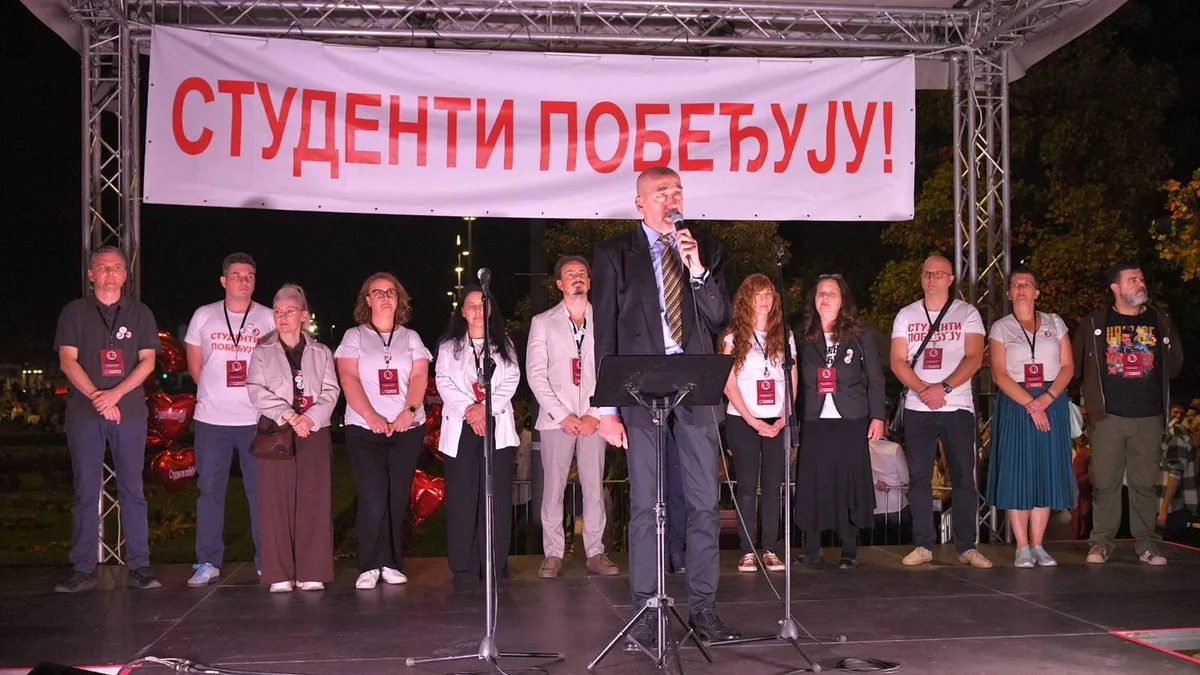
Suddenly, everything happened very quickly on Sunday evening. As early as 9:30 p.m., Aleksandar Vučić announced that his party had lost the election and that the student-led coalition had won a majority in the Serbian parliament. Celebrations erupted in the streets of Belgrade. After nearly two years of massive protests against corruption, oppression, and the erosion of democracy, the students have succeeded in defeating the regime.
In the third and final part of this series, we analyze the historic election victory of the student slate. How did a peaceful protest movement manage to bring about political change after years of democratic decline? And what does this victory mean for the future of Serbia and other protest movements?
From the Streets to Parliament
According to preliminary election results, the student slate won 141 of the 250 seats with nearly 54 percent of the vote. Vučić’s SNS won 103 seats with approximately 40 percent of the vote. This landslide victory brings an end to the regime’s years-long political dominance and oppression.
Voter turnout was unprecedentedly high, at around 69 percent. Never before have so many citizens in Serbia turned out to vote in such large numbers. In reality, however, turnout is even higher. This is because the voter rolls are not up to date. It is inspiring to see how the students have managed to get young people and citizens—who previously had little faith in change and politics—to the polls.
A nonviolent movement
Even after nearly two years of repression, intimidation, and oppression, the student coalition managed to maintain its peaceful resistance. The Vučić government tried in various ways to suppress the protest movement and discredit it. Peaceful demonstrators were arrested and detained, critical professors were denied their salaries, and the state-controlled media portrayed the students in a negative light.
Nevertheless, the students stuck to their peaceful strategy. Instead of responding with violence, they continued to demonstrate, which mobilized more and more Serbs. In doing so, they prevented the regime from using violence as a justification to further suppress the protests.
It was precisely that peaceful perseverance that proved to be an essential strength of the student movement. By refusing to respond to Vučić’s provocations, the students managed to maintain their credibility. As a result, the students gained increasing support from broader segments of Serbian society.
The Difficult Next Step
Still, Vučić’s departure does not mean that Serbia will suddenly become a well-functioning democracy again. After years in which the ruling party gained increasing control over state institutions, the judiciary, and the media, the student-led coalition faces an enormous challenge. We have already seen in Poland and, more recently, in Hungary just how difficult this can be in practice.
Restoring independent institutions, fighting corruption, and strengthening the rule of law will take time. Furthermore, the student slate consists of candidates with diverse political views. While they have so far been able to unite in their opposition to Vučić, they will now have to make joint decisions about Serbia’s future.
In addition to forming a government and appointing a prime minister, the student council will soon face a new challenge: a new president must also be elected by December 25, 2026, at the latest.
A movement that inspires?
The significance of these elections may extend beyond Serbia's borders. In a world where democratic backsliding is occurring in more and more countries, the student slate has shown that democratic change is possible.
Despite provocations, police violence, and smear campaigns, the students in Serbia continued their peaceful protests. By fighting against corruption and for a democratic future, they gradually gained more and more support. Ultimately, the student slate, like Péter Magyar, demonstrated that even in an electoral autocracy, democratic change is still possible.
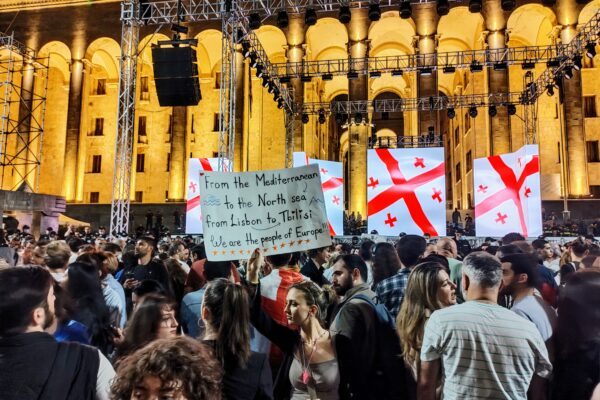
In countries such as Albania and Georgia, too, young people have recently taken to the streets en masse to protest against corruption and political leaders. Although the political circumstances differ, the victory in Serbia could serve as an important source of inspiration for these movements—and perhaps even as a blueprint for change.
The first step has been taken. It remains to be seen whether the Student List will succeed in restoring Serbia to a full-fledged democracy. But for now, the election results in the Western Balkans offer cause for hope.