Democracy
On August 27, Ratko Mladić died while serving a life sentence at the UN detention center in The Hague. The Serbian general, also known as the “Butcher of Bosnia,” was responsible for the worst massacre in Europe since World War II and was convicted by the International Criminal Tribunal for genocide, war crimes, and crimes against humanity. When news of his death broke, the most striking—though not surprising—reaction came from his home country of Serbia.
A revisionist heroic narrative as a campaign tool
Serbian Justice Minister Vujić was quick to declare that Mladić would receive all the state and military honors he deserves. A segment of the Serbian population still views Mladić as a hero who defended the Serbs during wartime. President Vučić responded more cautiously, saying that the government is in close contact with Mladić’s family and that their wishes are the most important.
On the one hand, President Vučić wants to keep his ultranationalist supporters happy by using the death of the general—who was beloved by many—as a grand moment of honor and glorification, especially with an eye toward the upcoming elections. On the other hand, he realizes that relations with the European Union will only deteriorate if a genocidal war criminal is honored, which will further complicate the already stalled EU accession process.
On Monday, we saw Vučić’s feeble attempt at a compromise: no official state funeral, but a military funeral with soldiers, medals, and a ceremonial gun salute. Although Vučić himself was not present, senior government officials, including Vujić, were in attendance. This comes as no surprise, however, given that Mladić’s body was flown in on a government plane and welcomed in a coffin draped in the national flag—all broadcast on the state-backed channel Informer. The so-called “non-state funeral” painfully illustrates how the glorification of Serbia’s horrific past is deeply rooted in the ultranationalist government. Vučić capitalized on the media attention on the day of the funeral and announced that early elections will likely take place on October 25.
In short, the funeral was a state funeral in every respect except for the name. An EU spokesperson, however , claimed that Mladic was buried without state honors, a statement that drew widespread criticism. It shows that the EU is still struggling to take action against Serbia’s increasing glorification of past atrocities.
Critical Voices from Serbia
The Social Democratic opposition party SSP responded to Mladić’s death by stating that no one who has committed such war crimes should be a role model for future generations. The party calls on the region to confront the past and pay tribute to the victims. Another opposition party, ZLF, says that death does not end responsibility for the war crimes committed and calls on the government to prevent any glorification of Mladić. The Serbian civil society organization Academy for Democratic Development (ADD) called the government’s glorification of genocide “scandalous and shameful.” According to the organization, the Vučić regime is proud of that past and “is actively building its political platform on it.”
Few other opposition parties or civil society organizations spoke out about the de facto state funeral. In recent years, the government has shifted from denying the genocide to openly celebrating and glorifying the past. The narrative often portrays those convicted of war crimes as heroes who defended the Serbs, rather than as the aggressors. Suppressed by fear and years of propaganda in the education system and the state-controlled media, it has now become dangerous for Serbian journalists and civil society organizations to raise critical voices.
Actions, not words
The EU must see the hero’s funeral for what it really is: an opportunistic stoking of nationalism during the campaign season. Although Enlargement Commissioner Marta Kos has canceled her trip to Serbia this coming Friday and condemned the glorification as “incompatible with the values on which the EU’s path is built,” more action must be taken. The S&D calls on the EU to end the reconciliation process and hold Vučić accountable. The Greens/EFA condemn the glorification of convicted war criminals and call on the EPP to address its alliance with Vučić’s SNS party.
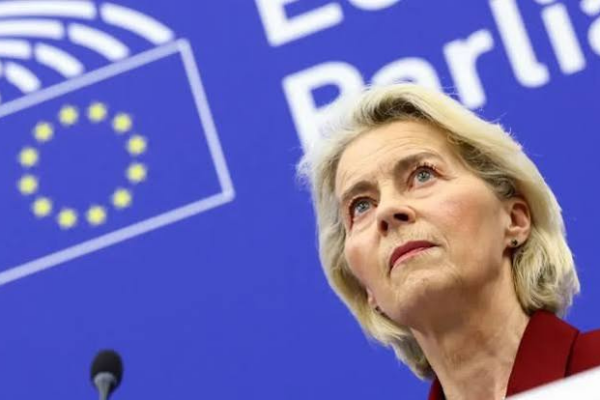
Just like Enlargement Commissioner Kos, von der Leyen should not visit Serbia during her upcoming trip to the Balkans. Especially during the campaign season, it is crucial that Vučić not be given any opportunities to speak to the press that could be used to gloss over human rights violations. Vučić is willing to patiently follow the path to EU accession, awaiting more nationalist-conservative allies among the EU member states, such as France and Germany. Strongly worded condemnations are not enough; the EU must take action.
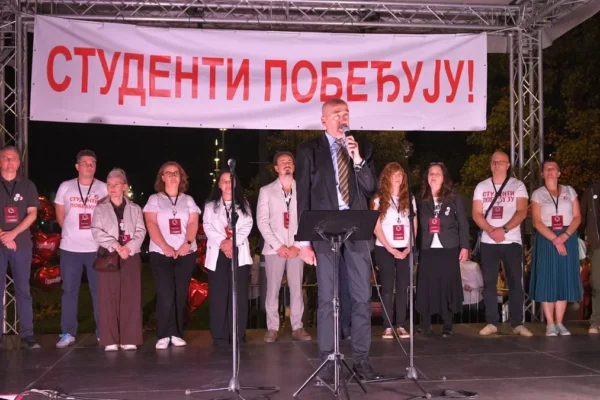
As long as there is no justice for the victims’ families and no reconciliation with the region, Serbia has no place in the European community built on democratic values. We must confront the atrocities of the past and show respect for the victims, in cooperation with the other former Yugoslav countries in the region. It is up to the new generation—such as the protesting students—to build a democratic and free Serbia that is willing to learn from the past. The EU has a responsibility to support democratic movements and thereby rebuild civil society in Serbia.