Democracy
Autocratization is on the rise in EU candidate countries, and the far right is gaining ground in member states; yet the democratic deficit of the European Union itself remains unmentioned in von der Leyen’s State of the Union address. With Russia’s escalations and the impending accession of Ukraine and Moldova, the EU and its member states can no longer ignore the issue: the debate on how to democratically reform the Union and counter anti-democratic forces must be revitalized.
A European Security Council, Canada as the first EU “partner member state,” and a ban on social media use for young children—these were the headlines that dominated the news surrounding EU Commission President Ursula von der Leyen’s State of the Union address. Understandably, security and a decisive European Union—independent of unpredictable countries (read: Trump)—took up a large part of the German politician’s speech.
Democratic deficit
However, the elephant in the room went unmentioned. The EU has always struggled with a significant democratic deficit. In the last European Parliament elections, voter turnout was only 50.7 percent. Barely more people—52 percent—say they have confidence in the European Union, according to a Eurobarometer survey. This lack of support is even lower in non-urban areas. Precisely now that the accession of countries such as Moldova and Ukraine is moving higher and higher up the political agenda (only 56% support EU enlargement), it is more important than ever that the democratic deficit be addressed. The European project, often hailed as the very beacon of stability, freedom, and democratic values in the world, cannot be satisfied with such dismal ratings. In times of a resurgent far right, as we recently saw in Germany, it is crucial that a dialogue finally gets underway to put European democratization on the agenda.
The Rise of the Far Right
Last week’s victory of populist scapegoating politics in Saxony-Anhalt is yet another sign of a trend that can be seen not only in Europe but all over the world: the far right is on the rise. Marginalized groups, freedom of speech, judges, and journalists are paying the price. Yet the response from the political establishment remains consistently the same: first shock, then a strongly worded condemnation, only to subsequently fall back into the same old politics that actually enables the rise of the far right. The tactics of the AfD, the PVV, or Marine Le Pen go beyond merely capitalizing on xenophobic gut reactions. They exploit people’s sense of alienation and the distance they feel from politics. Simply put: many people feel unrepresented, and the far right is only too happy to fill that void.
Wake-up call
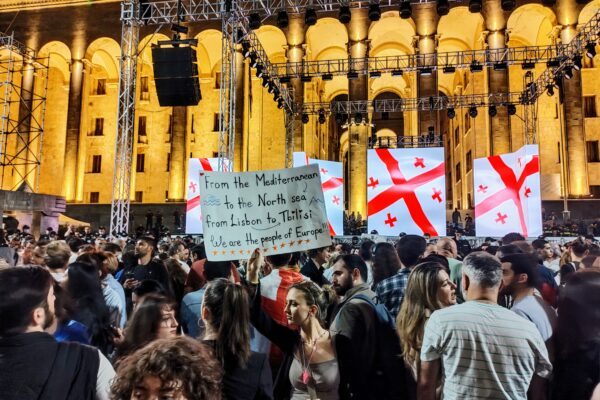
For the EU in particular, this should not merely be a reason for indignant statements, but an urgent wake-up call. The longer the Union puts off the debate on democratic reforms, the more far-right movements in Europe will gain ground. That debate should not only take place within the European institutions, but also—and especially—within the member states. In response to the Russian invasion and hybrid attacks on the European continent, Georgia, Moldova, and Ukraine applied for EU membership in 2022. The advanced negotiations with the latter two countries herald a new era for the EU. The Union and its member states must seize this moment to breathe new life into the debate on democratic reforms.