Democracy
Last week, Romania’s centrist, pro-European government, led by Prime Minister Ilie Bolojan, fell after just ten months in office. The government’s collapse has caused widespread consternation, both within the country and abroad: Bolojan’s government was toppled by a motion of no confidence passed in parliament, which resulted from a collaboration between the Social Democratic Party (PSD) and the far-right AUR. The PSD had been a partner in the Bolojan government but withdrew from the coalition in April due to dissatisfaction with the proposed austerity measures—and decided not long after to enter into a controversial alliance with the AUR. What explains the PSD’s actions, and what lies ahead for Romania?
An Unhappy Marriage
According to investigative journalist Jochem van Staalduine, the Bolojan administration, which took office in 2025, has been an unhappy marriage from the very beginning. The coalition, which consisted of the liberal PNL, the social-democratic PSD, and the anti-corruption party USR, with some support from the Hungarian minority parties, was formed to exclude the far-right AUR. The AUR is led by the young ultranationalist George Simion, who strongly models himself after Donald Trump and Viktor Orbán and refuses to speak out against the Russian invasion of Ukraine.
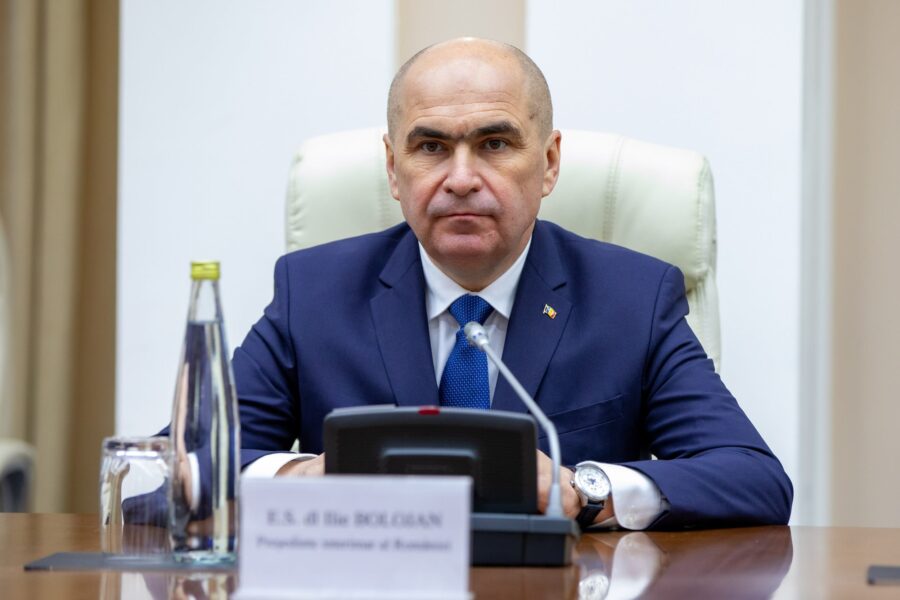
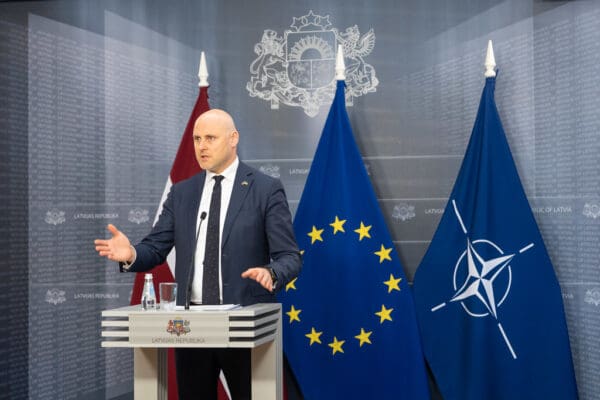
Prime Minister Ilie Bolojan of the liberal PNL
To keep Simion and his followers out of power, an alliance formed between natural opposites. In Romania, the social-democratic PSD is a traditional, long-established ruling party that, due to persistent corruption scandals and irresponsible management of public finances, faces many political opponents—such as the USR, which systematically opposes the PSD. Consequently, this conflict has never been fully resolved during the ten months of the Bolojan administration. A crucial factor here is that Romania was still eligible for EU funds, provided it brought its budget deficit under control by August of this year. To unlock those billions, the PNL and USR wanted to cut government spending, while the PSD, on the other hand, pushed for higher pensions and salaries. Ultimately, the PSD decided it did not want to bear the responsibility for an austerity policy and chose to leave the government.
According to Van Staalduine, this stance taken by the PSD should not be viewed as the behavior of a principled left-wing party, but rather as a populist move. The PSD, in particular, bears a great deal of responsibility for the budget deficit Romania is currently facing, in part by—especially in election years—avoiding difficult decisions regarding austerity measures in the public sector and public sector salaries. Partly because of this, the PSD has lost a great deal of popularity—including to the far-right AUR—and sharing responsibility for major austerity measures would lead to further loss of face.
Firewall
If the PSD’s decision to leave the Romanian coalition for these reasons can already be considered irresponsible, then the Social Democrats’ subsequent decision raises even more eyebrows: a week after the government fell, the PSD managed to bring down the Bolojan cabinet by submitting a motion of no confidence jointly with the AUR. In the Romanian media, the motion hasn’t caused much surprise, says Van Staalduine: “Romania doesn’t have as strong a firewall against the far right as Germany does, and PSD members will say it was ‘just a motion’ and not intensive cooperation—as might also be the case in the Netherlands with a motion of no confidence.” Instead, the question being asked in Romania now is whether the cooperation between the PSD and AUR could be a prelude to a future coalition government. But that possibility is slim, says Van Staalduine: “The PSD is primarily open to returning to the same coalition, with new governing agreements and under new leadership. The main intention of this motion was to shake up the political scene.”
The distinction between a one-time and a structural collaboration may well be significant in Romanian domestic politics, but at the European level, that argument doesn’t hold water. In Brussels, the PSD’s actions are primarily interpreted as yet another example of a broader European trend in which traditional ruling parties are increasingly demonstrating “tactical flexibility”—and are increasingly failing to set clear boundaries on their cooperation with far-right parties. For example, Renew MEP Valérie Hayer called the motion of no confidence an“irresponsible act at a critical moment,” and Romanian MEP Siegfried Mureșan asked the PES for an explanation as to why it “associates itself with one of the most radical and anti-European forces in the EU.”
That statement never came. In fact, the PES expressed solidarity with the PSD and made no mention of its Romanian affiliate’s collaboration with the AUR. Instead, the European Social Democrats said they were looking forward to “new leadership” and “renewed stability” in Romania. In this way, the European Social Democrats appear to interpret the events in Romania in the same way as the PSD itself: not as a transgressive, morally questionable collaboration between social democracy and the far right, but as a convenient coincidence based on idealistic grounds that could strengthen the PSD’s future position in the Romanian government.
Despite the slim chance that the PSD will actually enter into a future partnership with the AUR to form a coalition, the damage has already been done. The mere perception that the PSD is collaborating with the far right weakens the Social Democrats’ position in Brussels. Speaking lightly about such collaborations is naive: it ultimately weakens the position of a center-left bloc that presents itself as the credible and principled counterforce against the rise of the radical right.