Democracy
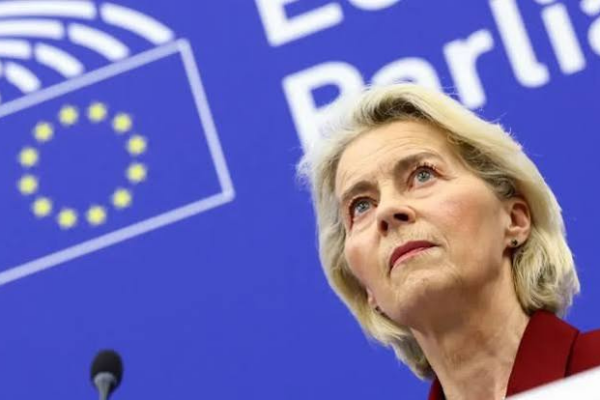
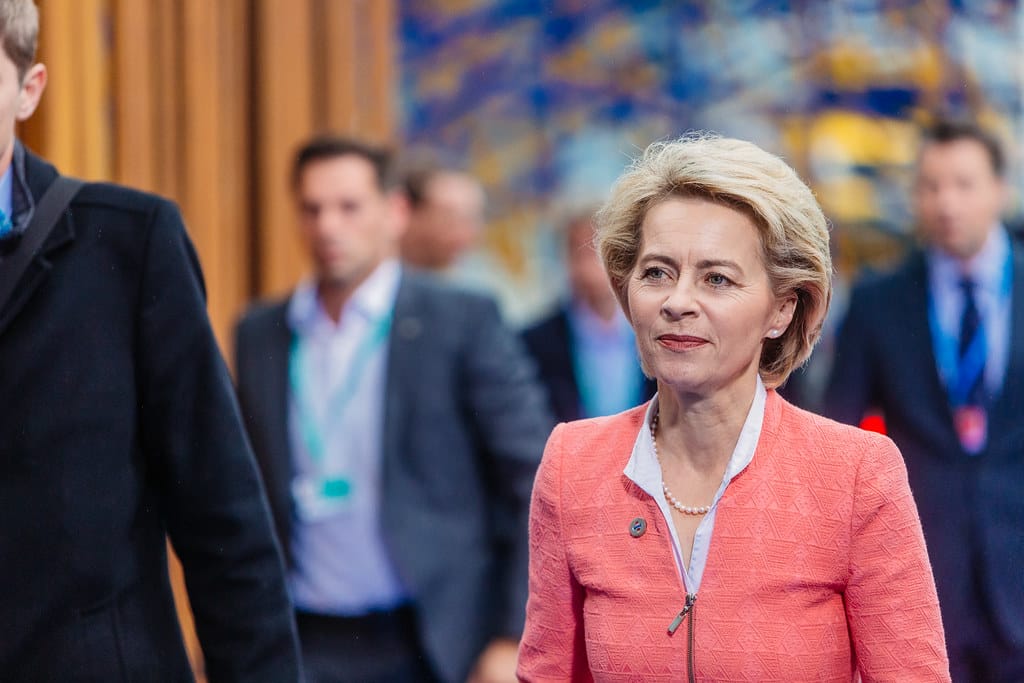
What does Europe stand for in the world? It is a question that seems to be getting harder and harder to answer. The identity crisis our continent has found itself in is becoming increasingly evident in the foreign policies of European countries and EU institutions. Principles once taken for granted—such as protecting and upholding international law and promoting the global democratic legal order—are proving to be fluid under the pressure of geopolitical chaos, with the actions of Commission President Ursula von der Leyen marking a low point for now.
In her view, international law is simply dead. With the world’s major players in autocratic hands, Europe, Von der Leyen argued, cannot “defend a system of order and rules on its own.” She believes Europe must start thinking more in terms of its own interests, rather than relying on the rules or alliances we previously took for granted. She is not alone: her German party colleague Merz expressed a similar sentiment, and the newly appointed Minister of Foreign Affairs, Berendsen, called international law“not the only framework”through which to view the world.
It is absolutely true that the world order has changed drastically. But Von der Leyen is making a crucial error in reasoning—one that is dangerous to everything Europe stands for. Protecting the international legal order and pursuing a common European foreign policy that strengthens and safeguards the democratic order worldwide is more than just a part of the European Union. It is the very raison d’être of the EU, enshrined in the founding treaties. We must never allow that to be abandoned.
If the European Union accepts that we have shifted to a world order based on the law of the jungle, all hell will break loose. In a world of pure Realpolitik, any act of aggression motivated by geopolitical self-interest—without having to take into account “annoying” constraints such as human rights or state sovereignty— is legitimized. Smaller states will survive by virtue of alliances based on their geopolitical value—for example, thanks to natural resources—but their survival will never be assured. In this way, we are creating a world in which everyone is constantly keeping everyone else at gunpoint.
Furthermore, a Europe that legitimizes wars and conducts geopolitics solely from the perspective of defensive security will soon cease to be a bastion of democracy. It is a victory for autocrats who are all too eager to make territorial claims to stoke nationalism, and who, in such a world, have no reason whatsoever to adhere to any democratic conditions whatsoever; it is a victory for the Kremlin, which has been working for years to undermine Europe’s democratic identity from within.
The European Union project has a future only if we remain steadfast, at all costs, in upholding the foundations of democracy and international law upon which our alliance is built. Of course, Europe must adapt to the realities of the world, but that precisely means we need more international law, supported by new countries. Europe will have to reorient itself geopolitically, in part by working to expand the UN Security Council to include the BRIC countries.
And Spanish Prime Minister Pedro Sánchez proves that this is indeed possible—and that not all of Europe thinks like von der Leyen. With his active opposition to the war in Iran and the genocide in Gaza, he represents the future of Europe in this world—a future in which Europe has broken free from the Americans and stands on its own two feet, deeply rooted in the democratic values upon which the Union is built. Sánchez offers us a glimpse of much-needed optimism—of a Europe characterized by steadfastness, independence, and an unbreakable bond among its members.
Well, let's just hope the Spaniards aren't that one little village…
Jens Bosman is an intern in the Democracy & International Cooperation program at the Max van der Stoel Foundation.